Your home is not just a backdrop to your life.
It is an active participant in it.
Every space you inhabit either supports your energy — or quietly works against it. The way a room is arranged, the colors on the walls, the direction your desk faces, the objects you choose to keep — all of it influences the invisible but very real flow of energy that shapes how you think, feel, sleep, work, and relate.
Feng Shui is the ancient art of understanding that relationship — and consciously designing your environment to support the life you want to live.
A brief history
Feng Shui — meaning literally “wind” and “water” — is one of the oldest living systems of environmental design in the world, originating in ancient China thousands of years ago. It developed from careful observation of nature: of how water flows, how wind moves, how the orientation of a dwelling affects the health and fortune of those within it.
At its foundation is the concept of chi — the vital life force that flows through all living things and all spaces. When chi flows freely and harmoniously, it supports well-being, clarity, and abundance. When it stagnates, is blocked, or moves too rapidly, it creates imbalance — sometimes subtle, sometimes profound.
Feng Shui is the practice of working consciously with chi. Of arranging your environment so that energy flows in ways that nourish rather than deplete.
The core principles
✦ Yin and Yang
At the heart of Feng Shui — and of all Chinese philosophy — is the interplay of yin and yang: the complementary, opposing forces that together create balance. Yin is receptive, soft, dark, and calm. Yang is active, bright, warm, and dynamic. Neither is better than the other. Both are necessary.
A space that is entirely yin feels heavy, stagnant, and uninspiring. A space that is entirely yang feels overwhelming, restless, and exhausting. The art of Feng Shui lies in finding the right balance for the purpose of each space — soft and yin in the bedroom, more yang in a workspace, balanced in living areas.
✦ The Five Elements
Feng Shui works with five elemental energies — Wood, Fire, Earth, Metal, and Water — each carrying its own qualities, associations, and influences. Balancing these elements within a space is one of the primary tools of Feng Shui practice.
Wood — Growth, vitality, expansion, and new beginnings. Expressed through wooden furniture, plants, and the colors green and brown. Supports health, family, and personal development.
Fire — Passion, transformation, visibility, and warmth. Expressed through candles, lighting, and the colors red, orange, purple, pink, and deep yellow. Supports recognition, creativity, and social connection.
Earth — Stability, nourishment, groundedness, and support. Expressed through earthy materials, ceramics, and the colors beige, tan, and sandy tones. Supports relationships, self-care, and emotional security.
Metal — Clarity, precision, efficiency, and mental focus. Expressed through metal objects, white and gray tones, and clean geometric forms. Supports organization, focus, and mental well-being.
Water — Flow, introspection, wisdom, and calm. Expressed through water features, mirrors, and the colors blue and black. Supports communication, spirituality, and career energy.
Each element interacts with the others in cycles of support and control — and understanding these relationships allows for increasingly nuanced and intentional environmental design.
✦ The Bagua Map
The Bagua — meaning “eight areas” in Mandarin — is one of the most important tools in Feng Shui. It is an energetic map, typically divided into nine zones, that can be superimposed over the floor plan of any space — a room, a home, an office, or even a desk.
Each zone corresponds to a specific area of life:
- Career & Life Path — North
- Knowledge & Self-Cultivation — Northeast
- Family & Foundation — East
- Wealth & Abundance — Southeast
- Fame & Reputation — South
- Love & Relationships — Southwest
- Creativity & Children — West
- Helpful People & Travel — Northwest
- Health — Center
By identifying which areas of your space correspond to which areas of your life, you can make intentional adjustments — introducing specific elements, colors, or objects — to activate or balance the energy in those zones.
✦ Colors in Feng Shui
Color is one of the most accessible and powerful tools in Feng Shui practice. Each color carries an energetic quality that directly influences mood, perception, and the flow of chi within a space.
Colors align with the five elements and the areas of the Bagua map — making intentional color choices one of the most effective ways to shift the energy of a room:
- Greens and browns (Wood) — Growth, renewal, vitality
- Reds, oranges, purples (Fire) — Passion, energy, warmth
- Beiges, tans, earthy tones (Earth) — Stability, calm, groundedness
- Whites, grays, metallics (Metal) — Clarity, focus, precision
- Blues and blacks (Water) — Depth, flow, introspection
Beyond elemental associations, consider the balance of yin and yang in your color choices. Soft pastels and muted tones are yin — calming and receptive. Bold, saturated colors are yang — energizing and stimulating. The right balance depends entirely on the purpose of the space and the quality of energy you want to cultivate within it.
Always, ultimately, trust your own response. Feng Shui principles are a guide — but your intuition about what feels right in your space is just as important.
✦ The Commanding Position
One of the most practical and immediately applicable principles of Feng Shui is the commanding position — the idea that in any room, the most important piece of furniture should be placed so that you can see the door without being directly in line with it.
For your bed, your desk, and your primary seating — this position creates a subconscious sense of safety, control, and awareness. When you can see what’s coming — even peripherally — your nervous system relaxes. Your focus deepens. Your sense of stability increases.
If the layout of your space makes the commanding position difficult, a mirror strategically placed to reflect the doorway achieves a similar effect energetically. However, mirrors should be used thoughtfully — placed above eye level, never directly facing the bed, and never in positions that create visual confusion or energetic disruption.
✦ Mirrors — Amplifiers of Energy
In Feng Shui, mirrors are considered one of the most powerful tools — and one of the most commonly misused. Because mirrors are associated with the water element, they amplify and reflect whatever energy is present. Placed well, they expand light, create a sense of spaciousness, and double the beneficial energy in a space. Placed poorly, they can amplify tension, disrupt sleep, or create energetic confusion.
General guidelines: mirrors work well in entryways to expand the feeling of welcome. They work well reflecting beautiful views, natural light, or meaningful objects. They should generally be avoided facing beds, facing other mirrors directly, or placed in positions where they reflect clutter or energetically heavy areas.
Incorporating Feng Shui into your life
You don’t need to overhaul your entire home to begin experiencing the benefits of Feng Shui. Small, intentional adjustments made with awareness, can shift the energy of a space remarkably quickly.
→ Begin with the entrance. The front door is considered the mouth of chi — the primary point through which energy enters your home. Keep it clean, well-lit, and welcoming. Remove clutter from the entryway. Ensure the door opens fully and easily. This single adjustment can shift the energy of the entire home.
→ Clear the clutter. Clutter is stagnant energy — objects that no longer serve you holding space that could be available for something new. This doesn’t require minimalism. It requires intentionality. What you keep should be either useful or genuinely loved.
→ Balance the elements. Walk through your space and notice whether any element feels dominant or absent. Too much metal and the space may feel cold and sterile. Too much fire and it may feel agitating. Introducing even one representative of a missing element can restore a sense of balance.
→ Apply the commanding position. Adjust your bed, desk, and primary seating so that you can see the door from each position. Notice how your sense of ease in the space shifts.
→ Be mindful of what you display. Every object in your space carries an energetic message — to you, and to the chi flowing through the space. Display what uplifts you. Store or release what doesn’t.
The benefits of Feng Shui
Contrary to the belief that we are unaffected by our environment, feng shui teaches us that our surroundings profoundly impact our well-being. It is a form of self-help that goes beyond merely fixing our homes. By arranging our living spaces to align with our desired lives, we can positively influence our thoughts, behavior, and overall mindset.
Feng Shui offers numerous benefits that extend beyond mere aesthetics, including feelings of safety, calm, and peace. By embracing this practice, you can experience the following:
Improved well-being — A Feng Shui-aligned space supports better sleep, reduced stress, increased focus, and a general sense of ease and vitality. When your environment works with you rather than against you, everything feels less effortful.
Enhanced relationships — The energy of shared spaces influences the quality of interactions that happen within them. Optimizing living areas, dining spaces, and bedrooms for harmonious chi creates an environment where connection, communication, and intimacy can flourish.
Increased abundance and prosperity — Activating the wealth and abundance area of your Bagua — through intentional placement, color, and element — aligns your environment with the energy of prosperity. This is not magical thinking. It is the principle that what you consciously attend to tends to grow.
Heightened intuition and spiritual connection — A space designed for mindfulness and reflection naturally supports deeper inner work. When the external environment is harmonious, the internal environment tends to follow. Feng Shui creates the conditions in which intuition, creativity, and spiritual awareness can flourish.
A shift in perspective — Perhaps most profoundly, the practice of Feng Shui changes how you see your environment — and through it, how you see your life. You begin to notice the relationship between your outer world and your inner state. And from that awareness, conscious change becomes possible.
✧ Where would you like to begin?
| ✦ If you want to cleanse and reset the energy of your space The ancient art of smudging One of the oldest and most effective practices for clearing stagnant energy — before or after Feng Shui adjustments. | ✦ If water energy fascinates you The enigmatic intelligence of water Water is one of the most powerful and most misunderstood elements in Feng Shui. This is a deep dive into its wisdom. |
| ✦ If scent is part of how you create atmosphere The enchantment of aromatherapy Fragrance is a powerful energetic tool — and one that complements Feng Shui practice beautifully. | ✦ If you want to understand esoteric sciences more broadly Journeying into the Unknown Feng Shui is one thread in a vast and ancient tapestry of wisdom about the relationship between humans and their environment. |
✧ Featured articles
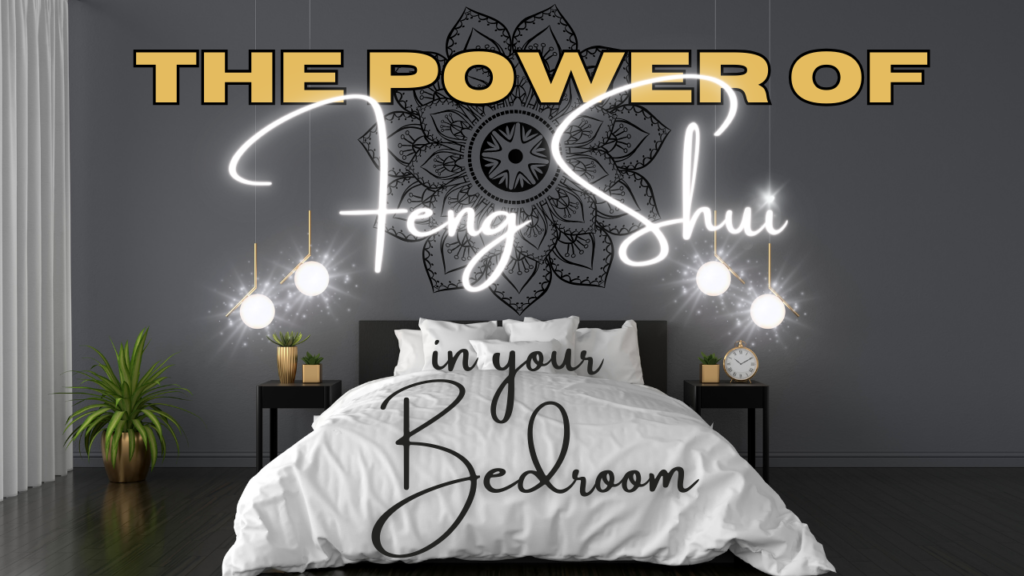
Creating Serenity in Your Bedroom – Your bedroom is more than a place to sleep — it’s an energetic sanctuary that either restores or depletes you each night.
Elemental Harmony— Earth, Water, Fire, Air – The elements of Feng Shui are not just decor principles — they’re a language for creating environments that feel alive and balanced.

✧ You might also feel drawn to
| Your Home (Lifestyle) — Feng Shui and conscious home design are natural companions. This is where the broader exploration of your living space lives. | Spirituality (Inner You) — Feng Shui is, at its heart, a spiritual practice — one that honors the relationship between the visible and invisible dimensions of life. |
| Your Ideal Day (Lifestyle) — The way you arrange your space directly shapes the quality of your daily life. A Feng Shui-aligned environment makes living your ideal day infinitely more natural. | Self-Awareness (Inner You) — The state of your space often reflects the state of your inner world. Exploring both together accelerates transformation in both. |
✧ Continue exploring Magic Tools
Feng Shui is one way of working with energy. There are others.
✦ Meditation — A dedicated meditation space, arranged with Feng Shui awareness, deepens the quality of your practice significantly.
✦ Crystals & Stones — Place them with Feng Shui intention and their energy becomes part of the energetic architecture of your home.
✦ Astrology — Astrological timing can inform Feng Shui adjustments — identifying the most supportive moments for making changes in your space.
✦ Tarot Cards — Creating an intentional space for tarot practice is itself a Feng Shui act — one that honors the ritual and elevates the experience.
✦ Sleep Management — The bedroom is the most important room in Feng Shui. How you arrange it directly influences the quality of your sleep and your restoration.
✧ A closing thought
The space you inhabit is never neutral. It is always in conversation with you — reflecting, amplifying, and shaping your inner world in ways both subtle and profound.
When you bring awareness to that conversation — when you begin to arrange your environment with intention rather than habit — something shifts. Not just in the space. In you.
“Your home should tell the story of who you are,
and be a collection of what you love.”
— Nate Berkus —