


The Energy Centers That Shape Who You Are — Body, Mind, and Soul
You Have Already Felt Them — You Just Didn’t Have the Words
Long before you encountered the word chakra, you felt them.
You felt it in the heaviness that settles in the chest after a loss that hasn’t been grieved. In the knot that forms in the stomach before a confrontation you’d rather avoid. In the strange lightness that arrives after a moment of genuine forgiveness — as though something that had been held for a long time has finally been allowed to move.
You felt it in the colors you are drawn to and the ones you instinctively resist. In the activities that restore you and the ones that quietly drain you. In the recurring patterns — in relationships, in health, in the particular ways your life seems to open or to close — that follow you across years and circumstances with a consistency that logic alone cannot explain.
The chakra system is, at its core, a map of all of this. A sophisticated, ancient framework for understanding the invisible architecture of the human being — the energetic infrastructure that underlies and shapes everything visible: our physical health, our emotional patterns, our relationships, our creativity, our capacity for joy, our connection to something larger than ourselves.
It originated in the Indian Vedic tradition, where it was understood that the human body is not only a physical structure but a living field of energy — and that within that field, seven primary centers of concentrated energy exist, each governing a specific dimension of our experience. These centers were called chakras — a Sanskrit word meaning wheel or circle — because they were understood to spin, to move, to be alive. Not fixed points but dynamic vortexes, constantly receiving and transmitting energy, constantly reflecting the state of our inner world.
What the ancient seers mapped thousands of years ago, modern energy work, somatic psychology, and even neuroscience are beginning to confirm: the body keeps a record. And the chakras are, in many ways, where that record is stored.
More Than Metaphysics: How Chakras Show Up in Everyday Life
The chakra system can sound abstract until the moment it becomes personal.
Consider the throat chakra — the fifth energy center, associated with communication, authentic self-expression, and the courage to make oneself heard. Its color is blue. Its domain is the voice — not just the physical voice, but the deeper voice of the self: the capacity to say what is true, to ask for what is needed, to express what is felt without swallowing it back down.
When this chakra is blocked or underactive, the signs are not always obvious. They can be as subtle as a persistent preference for writing over speaking — a sense that words flow more freely on a page than they ever quite manage to in a room. A discomfort with confrontation, with insisting, with pressing for what is needed in professional or personal situations. A voice that, no matter the effort, doesn’t quite carry the way you wish it would. An inexplicable resistance to certain shades of blue.
These are not personality quirks. They are the energetic body speaking — quietly, consistently, in the language of preference, aversion, and recurring pattern.
This is what makes the chakra system so quietly revelatory: once you begin to understand it, you start to recognize it everywhere. In the chronic tension that lives between your shoulder blades. In the creative block that arrives whenever a project requires you to be truly seen. In the anxiety that settles in the gut before situations that feel unsafe. In the exhaustion that follows spending time with people who take more than they give.
The chakras are not separate from ordinary life. They are ordinary life — seen from a different angle.
Seven Centers, One Whole System
The seven chakras are arranged along the central axis of the body — from the base of the spine to the crown of the head — each one governing a specific layer of human experience, and each one connected to the others in a living, interdependent system.
They are not independent units to be optimized separately. They are a continuum — a spectrum that moves from the most earthly and physical at the base to the most ethereal and transcendent at the crown. Each chakra builds on the ones below it: genuine spiritual connection (crown) is difficult to sustain without a foundation of personal truth (throat), emotional openness (heart), personal power (solar plexus), creative flow (sacral), and basic safety (root).
This is why chakra work is never simply about isolated fixes. It is about understanding the whole system — and recognizing where the flow has been interrupted, where energy has stagnated, and where attention and care are most needed right now.
Each chakra has its own color, its own element, its own planetary association, its own characteristic emotional and physical expressions — and its own set of practices, stones, and plants that support its rebalancing. What follows is a guide to all seven: not as abstract concepts, but as living dimensions of your own experience, waiting to be recognized.
A note worth holding as you read: the seven chakras explored here are the primary centers — the ones most universally recognized and most extensively mapped across traditions. But they are not the whole picture. The human energetic body is far more complex than any single framework can fully capture. Beyond these seven, there exist numerous secondary chakras — in the palms of the hands, the soles of the feet, behind the knees, at the shoulders — each playing its own role in the body’s energetic circulation. One particularly significant example is the Earth Star Chakra, located approximately 20 to 30 centimeters below the soles of the feet. This center anchors us to the Earth’s own energetic field, serving as the deepest grounding point of the entire system — the root beneath the root. And beyond these, many energy workers and researchers point to additional centers that have not yet been formally recognized or systematically studied. The seven are a doorway, not a ceiling. Consider them the beginning of a map whose full territory is still being discovered.
1. The Root Chakra (MULADHARA)
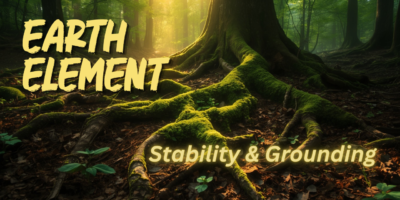
Deep within the heart of the earth, nestled amidst the roots of the oldest trees, resides the formidable Root Chakra. Awash in the vibrant hues of red, it exudes a sense of grounding and stability. This chakra reigns over our primal instincts, nurturing our connection to the material world. Just like the earth’s mighty core, it empowers us to stand tall, fostering a sense of security and self-assurance in our journey through life.
- Color: Red
- Location: Base of the spine
- Element: Earth
- Associated Planet: Saturn
- Body Part: Legs, feet, and skeletal system
- Characteristics: Stability, security, and feeling grounded
- Healing Stones: Red jasper, black tourmaline, and garnet
- Helpful Plants: Ginger, dandelion root, and ginseng
- Homeopathic Remedies: Arnica, Calcarea carbonica, and Silicea
2. The Sacral Chakra (SVADHISTHANA):
Embracing the gentle ebb and flow of life, the Sacral Chakra dances in the warm glow of orange radiance. It dwells within the realm of creativity and passion, igniting the flames of inspiration within our souls. Here, the sacred waters of emotion flow freely, awakening our sensuality and nurturing our deepest desires. Like a painter’s palette, it invites us to infuse our existence with vibrant colors and unbridled enthusiasm.
- Color: Orange
- Location: Lower abdomen, below the navel
- Element: Water
- Associated Planet: Jupiter
- Body Part: Reproductive organs, bladder, and lower back
- Characteristics: Creativity, passion, and emotional balance
- Healing Stones: Carnelian, orange calcite, and amber
- Helpful Plants: Orange, patchouli, and ylang-ylang
- Homeopathic Remedies: Sepia, Pulsatilla, and Lycopodium
3. The Solar Plexus Chakra (MANIPURA):
With the fierce intensity of a blazing sun, the Solar Plexus Chakra emanates a golden aura of confidence and willpower. Nestled in the core of our being, it governs our sense of personal power and identity. Here, we find the strength to navigate life’s challenges, the determination to forge our path, and the courage to face adversity head-on. This radiant chakra propels us forward, illuminating the way to self-discovery and growth.
- Color: Yellow
- Location: Upper abdomen, near the navel
- Element: Fire
- Associated Planet: Mars
- Body Part: Digestive system and abdominal muscles
- Characteristics: Personal power, self-confidence, and willpower
- Healing Stones: Citrine, yellow topaz, and tiger’s eye
- Helpful Plants: Lemon, chamomile, and rosemary
- Homeopathic Remedies: Nux vomica, Lycopodium, and Chelidonium
4. The Heart Chakra (ANAHATA):
Nestled at the center of our chest, the Heart Chakra radiates in the tender hues of green and pink. Here, the essence of love blossoms, intertwining with compassion and empathy. It is the sacred sanctuary where we nurture profound connections with ourselves and others. This chakra reminds us of the transformative power of love – the universal language that binds hearts and transcends boundaries.
- Color: Green or pink
- Location: Center of the chest
- Element: Air
- Associated Planet: Venus
- Body Part: Heart and circulatory system
- Characteristics: Love, compassion, and emotional balance
- Healing Stones: Rose quartz, green aventurine, and emerald
- Helpful Plants: Rose, jasmine, and lavender
- Homeopathic Remedies: Ignatia, Natrum muriaticum, and Pulsatilla
5. The Throat Chakra (VISHUDDHA):
In the ethereal expanse of the throat, the sky-blue Throat Chakra thrives. It is the gateway of self-expression and communication, where words take flight like a graceful songbird. Here, our authentic voice resonates, allowing us to convey our truths, ideas, and emotions. Like a clear azure sky, it invites us to speak our truth and share our unique stories with the world.
- Color: Blue
- Location: Throat area
- Element: Ether (or Akasha)
- Associated Planet: Mercury
- Body Part: Throat, neck, and vocal cords
- Characteristics: Communication, self-expression, and creativity
- Healing Stones: Blue lace agate, aquamarine, and lapis lazuli
- Helpful Plants: Eucalyptus, sage, and peppermint
- Homeopathic Remedies: Hepar sulph, Belladonna, and Phytolacca
6. The Third Eye Chakra (AJNA):
Perched between the eyebrows, the enigmatic Third Eye Chakra radiates in the deep hues of indigo. This mystical portal to intuition and insight unveils the unseen realms of consciousness. Like a guiding star in the night sky, it leads us toward heightened awareness, inner wisdom, and spiritual awakening. Through this all-seeing eye, we transcend the boundaries of the physical world, exploring the vast expanse of the soul.
- Color: Indigo (Deep blue)
- Location: Between the eyebrows
- Element: Light
- Associated Planet: Moon
- Body Part: Eyes, forehead, and pituitary gland
- Characteristics: Intuition, insight, and spiritual awareness
- Healing Stones: Amethyst, sodalite, and azurite
- Helpful Plants: Lavender, mugwort, and sandalwood
- Homeopathic Remedies: Bryonia, Lachesis, and Phosphorus
7. The Crown Chakra (SAHASHRARA):
Atop the pinnacle of our being, the Crown Chakra shines in the regal colors of violet and white. It is the sacred gateway to the divine, connecting us with the universe’s infinite wisdom and enlightenment. Like a shimmering crown of cosmic consciousness, it unites us with our higher selves and the celestial realms beyond. This ethereal chakra invites us to embrace a higher purpose, enveloping us in the grace of universal oneness.
- Color: Violet or white
- Location: Top of the head
- Element: Thought
- Associated Planet: Sun
- Body Part: Brain, pineal gland, and nervous system
- Characteristics: Spiritual connection, cosmic consciousness, and enlightenment
- Healing Stones: Clear quartz, amethyst (violet), and selenite (white)
- Helpful Plants: Frankincense, myrrh, and lotus
- Homeopathic Remedies: Aurum metallicum, Cannabis indica, and Opium
Want to Explore the Chakra System More Deeply?
If this introduction to the seven chakras has sparked your curiosity, you may want to explore the system in a more practical and structured way. This Chakra Healing Course offers a deeper look at each of the seven energy centers, including their characteristics, signs of imbalance, and practical techniques such as meditation, breathwork, visualization, and other approaches for bringing greater harmony to your practice. It is designed both for beginners who are discovering the chakra system and for those who already have some experience with energy work. Explore the Chakra Healing Course Now
The Map Is Already Within You
The seven chakras are not a system you need to master before you can benefit from understanding them. They are a language — and like any language, you learn it gradually, through exposure, through practice, and through the quiet accumulation of moments when something clicks into place.
You may find, as you read through each center, that certain descriptions land with unexpected recognition. That a particular chakra’s characteristics feel uncomfortably familiar — or that its qualities describe something you have been reaching toward without quite knowing how to name it. Pay attention to those moments. They are the system speaking directly to you.
The map has always been within you. These words are simply one way of learning to read it.
If this resonated with you, there is more to explore.
Subscribe to Alma Noble and receive the Mindful Soul Starter Kit as a welcome gift for your journey.
Claim Your FREE Soul Starter Kit

















Leave a Reply